New publication in Veterinary Parasitology: Regional Studies and Reports
16 nov 2026 - 12:55 CET
L.M. Campero, F. Fiorani, N. Sarraude, M.M. McAllister, A. Dellarupe, C. Morsella, E. Miqueo, A. Soto Cabrera, M.V. Scioli, I. Gual, M.C. Venturini, L.M. Ortega-Mora, W. Basso, D.P. Moore
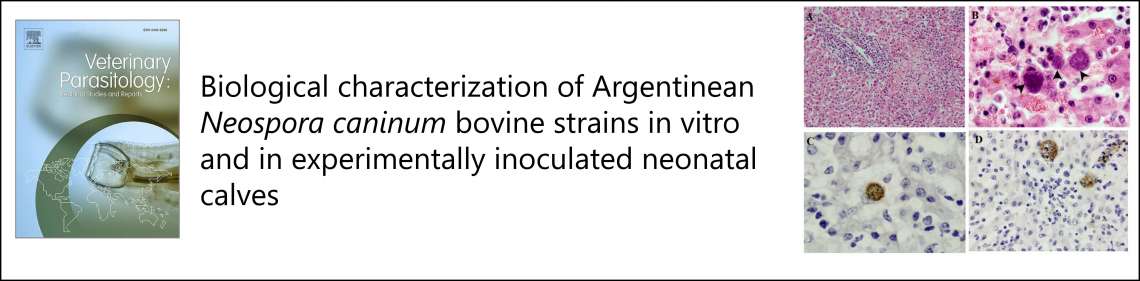
Neospora caninum is a major cause of bovine abortion worldwide. The biological characteristics and pathogenicity of different N. caninum isolates can vary considerably, influencing disease outcome in experimental and natural infections. In the present investigation, we studied two Argentinean N. caninum isolates of unknown virulence (NC-Argentina LP1 (LP1) and NC-Argentina LP2 (LP2) using in vitro and in vivo techniques. In vitro studies assessed invasion rates and tachyzoite yield, comparing both isolates to a high-virulence reference strain, Nc-Spain7. LP1 exhibited significantly lower invasion rates and slow tachyzoite proliferation compared to the control strain, while LP2 showed high invasion capacity but remarkably low tachyzoite proliferation. For in vivo characterization, six newborn Holstein calves were inoculated intravenously with escalating doses (4 × 10⁶–7 × 10⁷) of LP1 or LP2 tachyzoites and monitored for clinical signs, humoral immune response, parasite tissue distribution by molecular detection, and histopathological lesions. For each strain, 1 of 3 calves suddenly died from acute systemic infection with high parasite burdens in liver and central nervous system. Surviving animals developed progressive humoral immune response characterized by increasing antibody titers and avidity and low-level parasite persistence in various tissues. Parasite DNA was detected in several tissues from all bovine neonates, but higher concentrations were detected in the livers of calves that died of acute infection and in the lingual (3/4) and diaphragmatic muscles (2/4) of calves that were euthanized at the end of the experiment, but not in sampled muscles of the abdominal wall or hindlimbs. Histopathological and immunohistochemical examination revealed parasite invasion, inflammation, and cellular necrosis in the calves that died of acute infection, and mild to sparse inflammatory lesions in surviving calves. These findings provide a valuable model of chronic bovine neosporosis in neonatal calves and highlight the need to elucidate the early host-parasite interactions that determine progression toward acute mortality or controlled chronic infection. Additionally, these observations warrant further investigation in future studies specifically designed to address the mechanisms of virulence, tissue distribution, and long-term persistence of N. caninum.