New publication in Boletín Epidemioógico Semanal
7 oct 2026 - 09:54 CET
Toxoplasma gondii in water and food: public health concerns in Europe
Rafael Calero-Bernal, Gema Álvarez-García, Luis Miguel Ortega-Mora
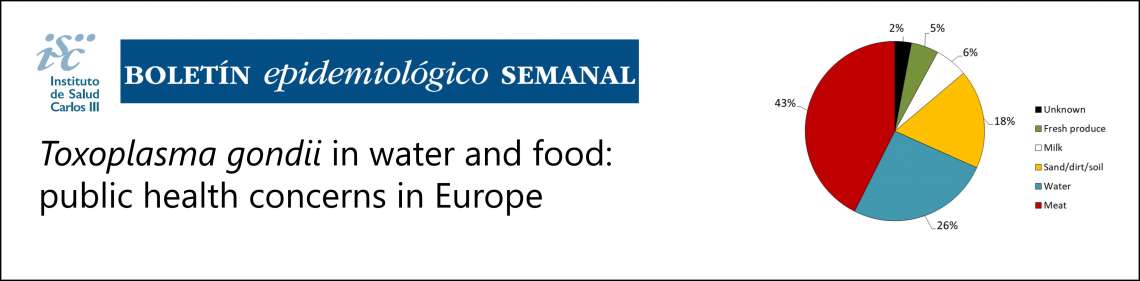
Toxoplasma gondii is considered a major zoonotic agent; its varied and effective modes of transmission and spread explain, among other factors, why 32% of the European human population is infected with the parasite, with even higher rates observed in livestock and game animals. Human infection has multiple sources, including undercooked meat and meat products that may contain viable tissue cysts; unpasteurized goat’s milk, which may contain tachyzoites; and untreated water, unwashed fresh vegetables, and fresh, unpurified bivalve mollusks, among others, which may harbor oocysts of the parasite. Currently, the exact proportion to which different modes of transmission contribute to human infections is unknown, and the available studies on risk factors are mostly outdated. This article aims to provide a critical analysis of the current information available and existing knowledge gaps regarding food- and water-borne sources of T. gondii infection in humans and suggesting potential approaches that will provide accurate information for assessing the risk of human infections on the European population.