New publication in Frontiers in Cellular and Infection Microbiology
27 abr 2026 - 09:47 CET
Roberto Sánchez-Sánchez, Natalia Velasco-Jiménez, David Arranz-Solís, Miguel Criado, Ignacio Ferre, Michela Re, Matthew A. Hulverson, Ryan Choi, Lynn K. Barrett, Andrew Hemphill, Wesley C. Van Voorhis, Luis Miguel Ortega-Mora
Background: Unlike mouse models of congenital toxoplasmosis, pregnant sheep models provide the opportunity to evaluate treatment strategies that more closely resemble clinical practice in pregnant women, including chemotherapeutic interventions initiated after specific IgM seroconversion. BKI-1748, which targets Toxoplasma gondii CDPK1 and MAPKL-1 protein kinases, has demonstrated an excellent safety profile and efficacy when administered repeatedly to pregnant sheep, starting at 2 and 7 days after challenge.
Methods: In this study, treatment was initiated at day 14 post-infection (p.i.), following T. gondii IgM seroconversion. Twenty-three sheep were orally inoculated with 10 TgShSp1 oocysts at 90 days of gestation, while three sheep remained uninfected. On day 14 p.i., infected sheep carrying live fetuses (n = 10) received 10 doses of BKI-1748 orally at 15 mg/kg every 2 days, whereas 10 infected sheep were left untreated.
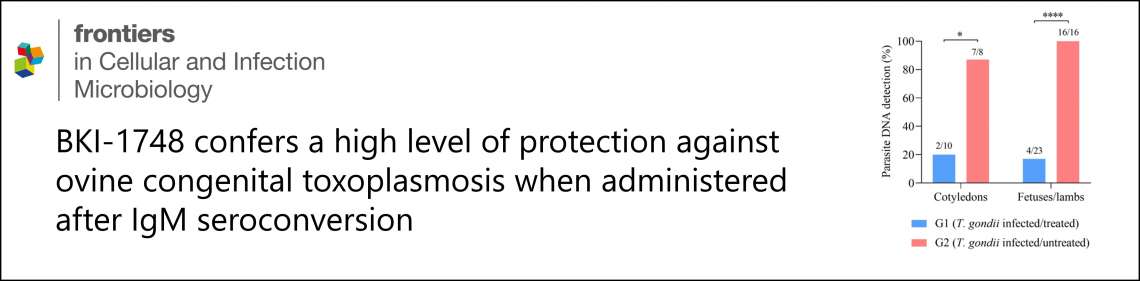
Results: All infected sheep, both treated and untreated, seroconverted to serum IgG by day 21 p.i., with treated sheep showing a marked reduction in IgG levels from day 28 p.i. onward. Administration of the compound significantly enhanced lamb viability in infected sheep, resulting in 91% viable lambs in treated animals compared to 52% in untreated sheep. Whereas all lambs born to untreated sheep were congenitally infected, only 17% of lambs in the treated group were infected. Nevertheless, congenitally infected lambs in the treated group had lower birth weights than T. gondii-free lambs.
Conclusion: This study highlights the potential utility of BKI-1748 for prenatal treatment of human congenital toxoplasmosis, in which IgM seroconversion prompts the need for intervention.