New publication in Veterinary Research
20 mar 2026 - 10:29 CET
Javier Regidor-Cerrillo, Andrea Largo-de la Torre, Roberto Sánchez-Sánchez, Ignacio Ferre, Javier Moreno-Gonzalo, Luis Miguel Ortega-Mora
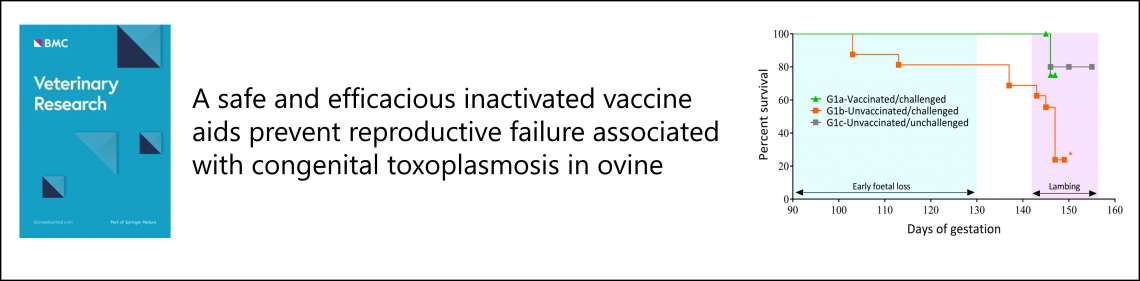
Toxoplasma gondii is an apicomplexan parasite causing reproductive failure in small ruminants. In this study, we evaluated the capacity of an inactivated vaccine to prevent reproductive failure caused by congenital toxoplasmosis in sheep. The vaccine is based on an antigen extract obtained from a low passage T. gondii Type III isolate (TgPigSp1) preserving the ability to spontaneously produce cysts in vitro and following a procedure involving parasite inactivation via hyperosmotic shock and membrane proteins solubilisation. The vaccine prototype, consisting of 40 µg of parasite extract adjuvanted with QuilA®, was evaluated in two different trials using a pregnant ovine model of T. gondii infection based on orally challenging sheep at 90 days of gestation with 10 sporulated oocysts of the heterologous Type II isolate TgShSp1. Two subcutaneous immunizations at days 55 and 76 of pregnancy caused mild and transient local reactions and had no discernible impact on gestation. Vaccination triggered both specific cellular and humoral immune responses. The proportion of viable gestations resulted in 100% (vaccine trial 1) and 78% (vaccine trial 2) in vaccinated/challenged ewes versus 50% in unvaccinated/challenged sheep. This increase in viable gestations was associated with a significant increase of lambs born viable for vaccine trial 1 (62.5%) and a decrease of early foetal losses (i.e. abortion) for vaccine trial 2 (70%), associated with control of T. gondii multiplication in the cotyledons. This inactivated vaccine could be a suitable and practical tool to mitigate economic losses in sheep caused by T. gondii outbreaks.