
Annalisa Plava (Associate Professor in Sociology-Department of Human Sciences-Link Campus University, Rome, Italy)
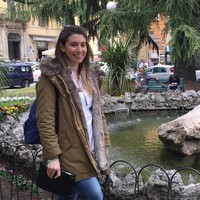
From November 2025, I am Associate Professor in Sociology (SPS/07) – Department of Human Sciences – Link Campus
University (Rome, Italy) where I am teaching Sociology and social research and Service and Innovation Design. My
research interests focus on the intersection of health, digital, and methodology, with a particular focus on developing creative
methods in dialogue with traditional ones in research-learning and care relationships.
In 2023, I earned a PhD in Sociology and Social Research at the University of Bologna with a thesis on childhood obesity,
eating habits, and lifestyles during the Covid-19 pandemic.
I was a research fellow for the following projects: ALMA IDEA "Pro.Dono. Properties and obstacles to postmortem body
donation to science," which resulted in the graphic novel "Il primo paziente" (Tunuè, 2024); and Horizon 2020 "EITHOS.
European Identity Theft Observatory System," from which a visual care kit to support victims of online identity theft has
been developed.
I have collaborated with the Centre for Studies and Research in Social Dynamics and Health (CEIDSS) as part of the World
Health Organization's Childhood Obesity Surveillance Initiative.
I am a member of the Centre for Advanced Studies on the Humanization of Care and Social Health
(CeUmS), the Centre for Interdisciplinary Research on Social Rights (CRIDS) at the University of Bologna and the Center
on Digital Technologies, Education and Society (DITES) at the Link University of Rome.
MAIN SCIENTIFIC PUBLICATION
MONOGRAPH
1. Plava A. (2023), Il peso dell’infanzia. Una ricerca sociologica su abitudini alimentari e obesità, BTS (Benessere,
Tecnologia e Società), FrancoAngeli, Milano (pp. 188).
SCIENTIFIC ARTICLES IN PEER REVIEW JOURNAL
1. Plava A. (2025). Tailor-made for children. Designing a pictorial questionnaire to explore eating habits, lifestyle, and body
perception. “Quality & Quantity”, 59(6): 1-26.
2. Moretti V., Plava A., Ratti S. (2025). The Ethics of Drawing Illness: Interdisciplinary Negotiations in a Participatory
Graphic Narrative Project, “The Qualitative Report”, 30, pp. 3476 – 3493.
3. Moretti V., Plava A. (2024). Il fumetto tra interprofessionalità e lavoro emozionale dei professionisti sanitari. “Salute e
Società”, 2: 118 – 132.
BOOK CHAPTERS
1. Plava A. (2023), Biorispetto e alimentazione sostenibile: le “virtù” delle mense scolastiche riminesi, in Maturo A., Plava
A. (a cura di), Stili alimentari e cibo biologico nelle scuole primarie. Un’analisi sociologica a Rimini, FrancoAngeli, Milano
(pp. 35-60).
2. Plava A. (2023), L’educazione alimentare tra famiglia-scuola e altre istituzioni: un’alleanza in corso, in Maturo A., Plava
A. (a cura di), Stili alimentari e cibo biologico nelle scuole primarie. Un’analisi sociologica a Rimini, FrancoAngeli, Milano
(pp. 88-99).
3. Plava A. (2023), Attività fisica, sedentarietà e obesità, in Maturo A., Plava A. (a cura di), Stili alimentari e cibo biologico
nelle scuole primarie. Un’analisi sociologica a Rimini, FrancoAngeli, Milano (pp. 100-111).
4. Plava A. (2023), Covibesity: abitudini alimentari e stili di vita delle famiglie riminesi durante i lockdown, in Maturo A.,
Plava A. (a cura di), Stili alimentari e cibo biologico nelle scuole primarie. Un’analisi sociologica a Rimini, FrancoAngeli,
Milano (pp. 112-123).
5. Plava A. (2022), Fibrosi polmonare idiopatica: le cicatrici invisibili dei «guerrieri stanchi» durante la pandemia, in Maturo
A., Gibin M. (a cura di), Malati sospesi. I pazienti cronici nell’era Covid, FrancoAngeli, Milano, pp. 134 – 154.
ENCYCLOPEDIA ENTRIES
1. Plava A. (2023), Covibesity, in Ritzer G., Rojek C. (eds.), The Wiley Blackwell Encyclopedia of Sociology, 2nd edition,
Malden, Oxford, pp. 1-5. Doi: 10.1002/9781405165518.wbeos1892
2. Plava A. (2022), Health Delivery Systems, in Ritzer G., Rojek C. (eds.), The Wiley Blackwell Encyclopedia of Sociology,
2nd edition, Malden, Oxford, pp. 1 – 6. Doi: 10.1002/9781405165518
Talk/Seminar Title: Children in the Making: using a Pictorial Questionnaire to
explore Body Perception and Lifestyles in learning-based research
Over the past two decades, social researchers have increasingly explored how to include children in social research,
integrating traditional methods with arts-based ones. Qualitative research, along with arts-based research, has often been
preferred with children because it allows for an in-depth understanding of their complex experiences, subjective
perspectives, and motivations, in ways that purely quantitative methods, which focus on numerical data and large groups,
cannot achieve. However, the limitations of qualitative and creative research with children include ethical challenges such as
the biographical barriers encountered in expressing oneself exclusively in words; the psychological stress of sharing personal
experiences orally and aloud in a one-on-one meeting or with other children or individuals; and the practical issues related to
the time-consuming nature of collecting data on samples larger than 10 and generalizing common findings. At the same time,
a purely quantitative elicitation approach could negatively impact the response process.
The quantitative-creative approach applied in classroom research that integrates an individual-level questionnaire with
qualitative and art-based insights is an area worth exploring. Indeed, it can overcome existing problems related to both
purely quantitative and creative approaches to elicitation, offering a broader analysis to obtain both collective (measurable)
and individual (perceptions, emotions) information from respondents. Quantitative-creative elicitation methods conducted in
classrooms can improve the accuracy of survey responses by encouraging respondents to reflect more deeply on their
answers, remember details more effectively, and overcome biases such as social desirability or acquiescence. Within large
samples, illustrated questionnaires are increasingly used to assess children's agency, a set of dynamic and processual
capacities for acting, making choices, and decisions that pay attention to the meanings and actions attributed in different
contexts. The analysis of the Pictorial Questionnaire, an objective method of interacting with children (but also adolescents)
through pictograms that capture their qualitative characteristics and quantitative regularities, already widely used by
teachers, psychologists, and researchers, can facilitate responses in contexts where reading or oral storytelling in a group
might create barriers to active participation. It can simultaneously collect collective and measurable information (objective
data) and individual data (perceptions, emotions, and reflections) on key topics in classroom research or in
community/clinical settings.
The primary objective of this seminar, featuring professionals and experts from the Research and Psychology in Education
Department, is to provide an innovative learning opportunity to foster a cross-disciplinary scientific dialogue with
individuals interested in and committed to promoting best practices in childhood health. Specifically, starting from an
analysis of the quantitative-creative research already developed and administered in an Italian case study, we will seek to 1)
establish awareness and reflection on the complex interrelationship between body perception, eating habits, and lifestyles in
childhood, 2) analyze an innovative and validated tool for facilitating the expression of a large number of young participants
in classroom research and learning, as well as its potential in other medical fields and 3) explore the cultural similarities and
differences between the Italian and the Spanish context.
This technique should be innovative in its ability to frame field research, stimulate children's active participation, carefully
consider the adult-child power differential in the specific context, the different socio-cultural resources and knowledge
available during interactions, the construction of a reliable research context, a safe and comfortable environment, a
meticulous choice of visual and textual languages, and the ethical and reflexive dimension of the research, ensuring the
integrity of the knowledge produced.